
At a farmers market or local event, more customers come from making the booth easy to understand, easy to enter and easy to remember. Lead with one clear promise, create a low-pressure conversation starter, show proof, capture permission to follow up and give visitors a reason to recognize you after the tents come down.
Your booth has three seconds to make sense
Event visitors are walking, talking, carrying coffee and pretending not to notice that they have already bought four candles. They will not stop to decode a wall of products or a clever company name that explains nothing.
Use one large, plain-language message that says who the offer is for or what problem it solves. “Fresh bread” is clear. “Sourdough baked this morning for people who miss bread with an actual crust” is clearer and more memorable.
Give people a comfortable way to stop
“Can I help you?” often earns a polite no because it feels like the beginning of a sales pitch. Try a specific, easy question instead: “Do you prefer sweet or spicy?” “Are you shopping for yourself or a gift?” “Want to see which finish handles Minnesota winters best?”
The question should help the customer sort choices, not trap them in a conversation. Once people answer, you can explain the most relevant option instead of reciting the entire inventory.
Show the product solving a problem
Displays work harder when they demonstrate an outcome. A maker can show how a bag fits a laptop and water bottle. A food vendor can label the heat level and best use for each sauce. A contractor at a home show can display a before-and-after material sample instead of covering the table with brochures.
Proof reduces the mental work of imagining ownership. It also creates visual information that customers can describe later when they tell someone about you.
Make prices and next steps visible
Hidden prices make many visitors assume the product is expensive or that they must endure a pitch to learn more. Show the price when possible, explain what it includes and make the buying process obvious.
If the sale happens later, display the next step: “Book a free 15-minute measurement check,” “Scan to see available dates,” or “Join the list for next month’s menu.” The goal is not to collect every email address at the event. It is to preserve a useful connection with people who genuinely want more.
Three local-event examples
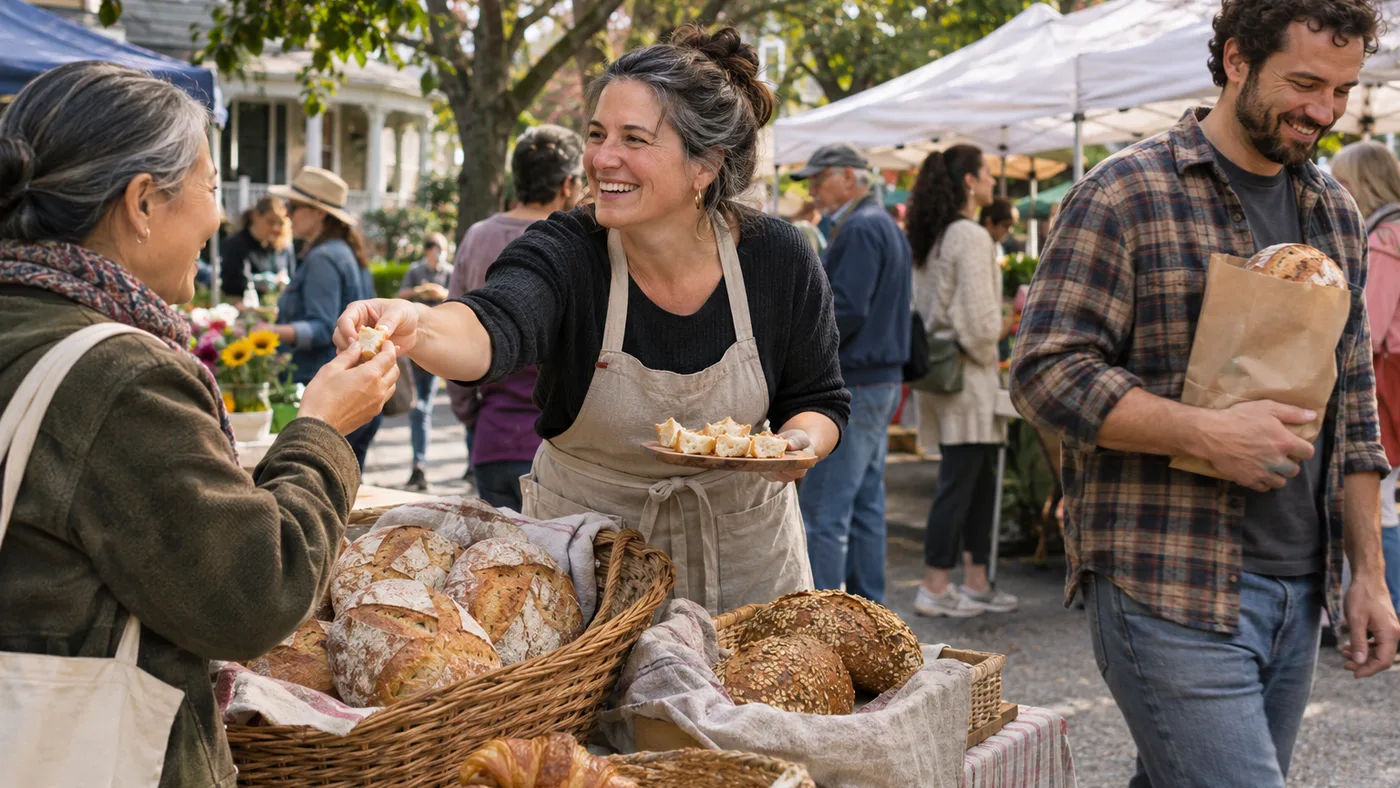
A bakery booth could feature one signature loaf, offer a small sample and ask whether the visitor likes a crisp crust or a softer sandwich bread. A simple card can list storage instructions and the next market date, making the business useful after the sale.
A jewelry maker could organize pieces by gift moment rather than material: everyday, milestone and “I survived this week.” The maker can explain one design detail and invite the visitor to try it on without immediately asking for a decision.
A residential painter at a neighborhood event could offer a five-minute paint-finish check using sample boards. Visitors leave understanding why eggshell, satin and semi-gloss behave differently, and the painter becomes the helpful expert rather than the person guarding a fishbowl of business cards.
Collect memory, not just contact information
If someone gives permission to follow up, record one useful detail: the flavor they liked, the room they are planning or the event they are shopping for. Then send a message that refers to the actual conversation.
“Great meeting you at Saturday’s market. You liked the smoky sauce, so here is the grilled vegetable recipe I mentioned” will outperform a generic newsletter welcome. It proves the event conversation mattered.
Follow up while the memory is warm
Post a recap within a day or two, thank the organizers and customers, and mention when people can find you next. Share useful answers to questions visitors asked, not just photos of the booth.
Local events work because they let customers experience the human advantage of a small business. The best booth does not shout the loudest. It helps the right person understand the offer, feel comfortable and remember exactly why stopping was worth it.
FAQs
What should I put on a farmers market sign?
Use a short statement that identifies the product and its most relevant difference, plus visible pricing and payment information. The sign should make sense to someone walking past without an explanation.
Should I offer discounts at a local event?
Only when the discount supports a clear goal. Samples, demonstrations, bundles or useful guidance often create more trust than automatically lowering the price.
How do I follow up with event leads?
Get clear permission, record what interested each person and follow up within a few days with the promised information or next step. Avoid adding everyone to a generic sales sequence without consent.