 ← Back to Blog
Quick summary for my fellow ADHD peeps:
People ask for quotes and then disappear because requesting a number is often part of their research, not a promise to buy. They may be comparing options, testing affordability, waiting for another decision-maker, feeling uncertain about the work, or getting stuck because the quote did not make the next step easy. The fix is not automatically lowering the price. Make the quote clearer, reduce the buyer’s unanswered risk, and follow up helpfully enough to learn whether the answer is no, not yet, or I’m confused.
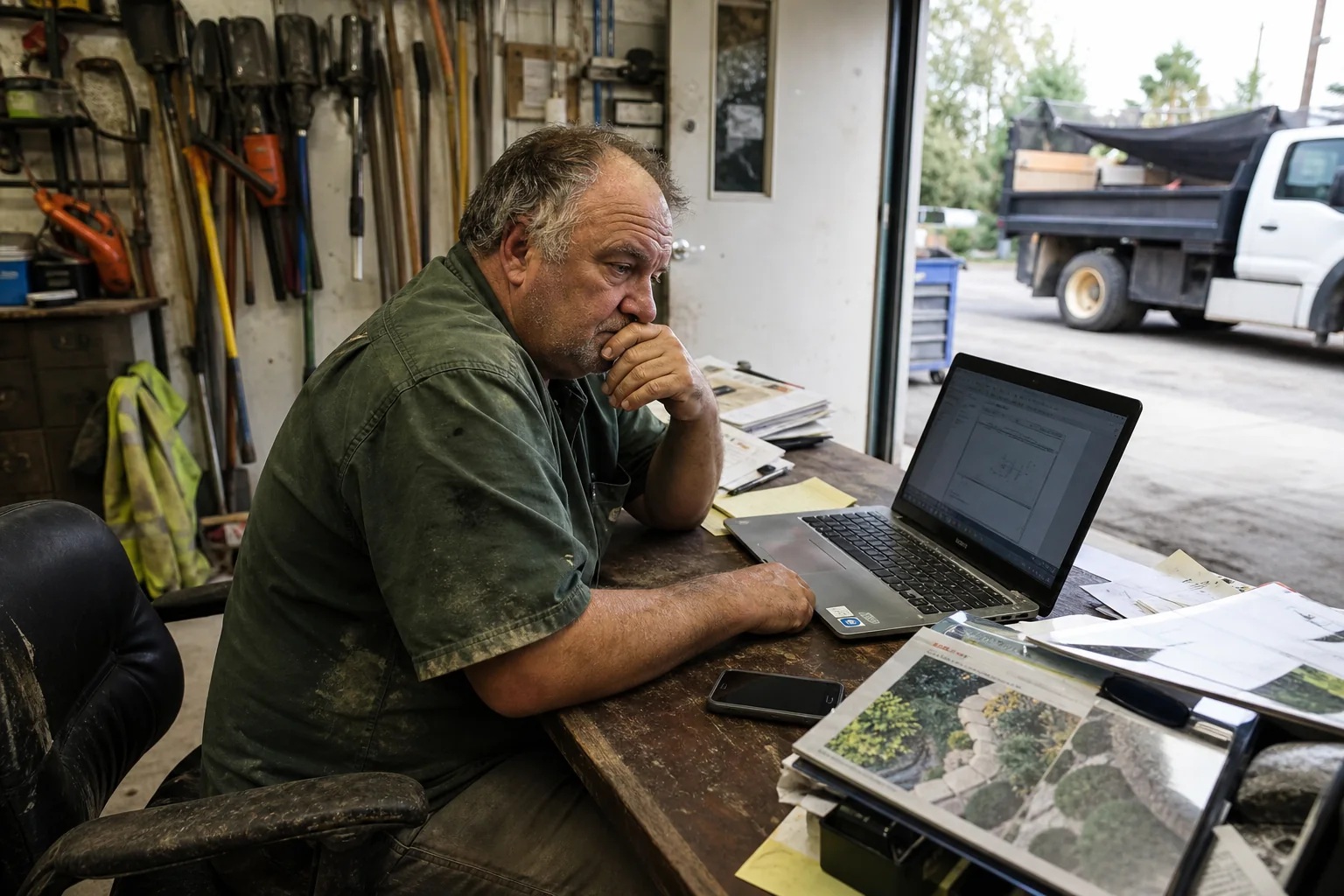
If you run a landscaping company, remodeling business, print shop, event venue, or any business that prepares custom estimates, quote ghosting can feel personal. You visited the property, measured everything, answered fourteen questions, and priced the job. Then the prospect vanished into the same mysterious dimension that contains missing socks and everyone who says, “Let’s definitely get coffee soon.”
A quote request is not the same as buying intent
Some people request three quotes because they genuinely intend to choose one. Others are gathering a number for next year, checking whether an insurance settlement is realistic, satisfying a spouse who said to research it, or trying to understand what the project involves. A few are simply curious and have no idea that your “quick estimate” requires forty-five minutes and a calculator that now knows too much.
You cannot eliminate early researchers, nor should you try. You can qualify the request before investing heavily. Ask what is prompting the project now, when they hope to begin, who else is involved in the decision, and what matters besides price. Those questions are not an interrogation; they tell you whether the person needs a rough range, a detailed proposal, or more education before either of you spends an afternoon on shrubs.
An auto body shop might give a preliminary range from photos, then schedule an in-person estimate once the customer confirms timing and insurance status. A custom cabinetmaker may state typical project minimums before designing a full layout. The goal is not to make customers prove their worthiness. It is to match the amount of estimating work to the seriousness and stage of the decision.
The quote may create more questions than it answers
Owners know what “spring cleanup and bed restoration” includes because they do it every day. A homeowner may wonder whether it includes hauling debris, edging, mulch, plant replacement, tax, and the strange dead thing behind the garage that everyone has agreed not to discuss.
A useful quote explains the result, scope, exclusions, timing, payment schedule, and next step. It should make clear what happens after approval and what could change the final price. If one company sends a line that says “Landscape work: $8,700” and another explains the sequence, materials, cleanup, warranty, and schedule, the second company has reduced more uncertainty even if its price is higher.
Do not confuse length with clarity. A sixteen-page proposal filled with boilerplate can hide the decision just as effectively as a vague text message. Put the information the buyer needs to compare and act where it is easy to find.
Buyers stall when the risk feels bigger than the reward
A quote asks the customer to exchange money for an outcome that may not exist yet. That is easy when the purchase is a familiar product and harder when the buyer worries about disruption, quality, safety, hidden costs, or being trapped with the wrong provider.
Suppose an adult daughter requests pricing from three home-care companies. The hourly rate matters, but so do caregiver consistency, schedule changes, medication boundaries, and what happens when her father refuses help. A quote that answers only the hourly rate leaves the riskiest questions untouched.
Look at the decision through the buyer’s eyes. Add the proof and explanation that make the promise safer: relevant before-and-after photos, a short process, credentials that actually matter, customer language about the same concern, and a named person to contact. Do not bury them beneath a logo parade or a claim that you are committed to excellence. Everyone claims excellence; nobody has ever advertised a moderate commitment to adequacy.
Give customers a real choice, not a yes-or-no cliff
One large proposal can force the buyer to accept everything or do nothing. When the work naturally allows it, offer two or three legitimate approaches. A landscaper might price essential drainage correction, drainage plus grading, and a complete plan that also restores the beds. Each option should solve a real version of the problem, not make the lowest tier intentionally miserable.
Choices reveal priorities. They can also rescue a good-fit customer whose budget or timing does not support the full project today. If you cannot offer levels, explain what can be phased and what should not be separated for safety or quality.
This is not permission to build a proposal that looks like an airline booking screen, where the customer eventually learns that dirt costs extra. Keep the choices understandable and honest.
Follow up to help the decision move
Owners often avoid follow-up because they do not want to sound desperate. Then they conclude that the customer rejected the quote, even though the customer may have missed the email, gotten busy, or assumed the next move belonged to the business.
Follow up once to confirm receipt, again when the buyer has had reasonable time to review, and a final time to close the loop. Match the timing to the size and urgency of the purchase. A $300 repair and a $40,000 renovation should not share the same sequence.
Each message should reduce effort. Ask whether a section needs clarification, whether timing changed, or whether an option would fit better. “Just checking in” is easy for you to type but gives the customer another blank assignment. “Would it help if I separated the drainage work from the planting plan?” gives them something concrete to answer.
If they say no, ask one calm question when appropriate: “What was the biggest factor in your decision?” Do not challenge the answer or launch a closing argument. The information is valuable only if customers feel safe telling the truth.
Stop blaming the number before you inspect the experience
Some quotes are lost on price. Others are lost because the customer did not understand the difference, trust the outcome, see an easy next step, or feel ready to decide. Treat every silent quote as a small piece of evidence instead of a verdict on your worth.
Track the source, project type, price range, time to send, follow-up, and stated reason when you have one. Patterns will show whether you need better qualification, faster delivery, clearer choices, stronger proof, or a different customer altogether.
Ready to keep going? Read The Follow-Up Gap and They Said, “You’re Too Expensive.” Now What?. Then listen to Underestimated Episode 27: Why Do Customers Choose My Competitors Instead of Me? to turn a lost quote into useful buyer insight.