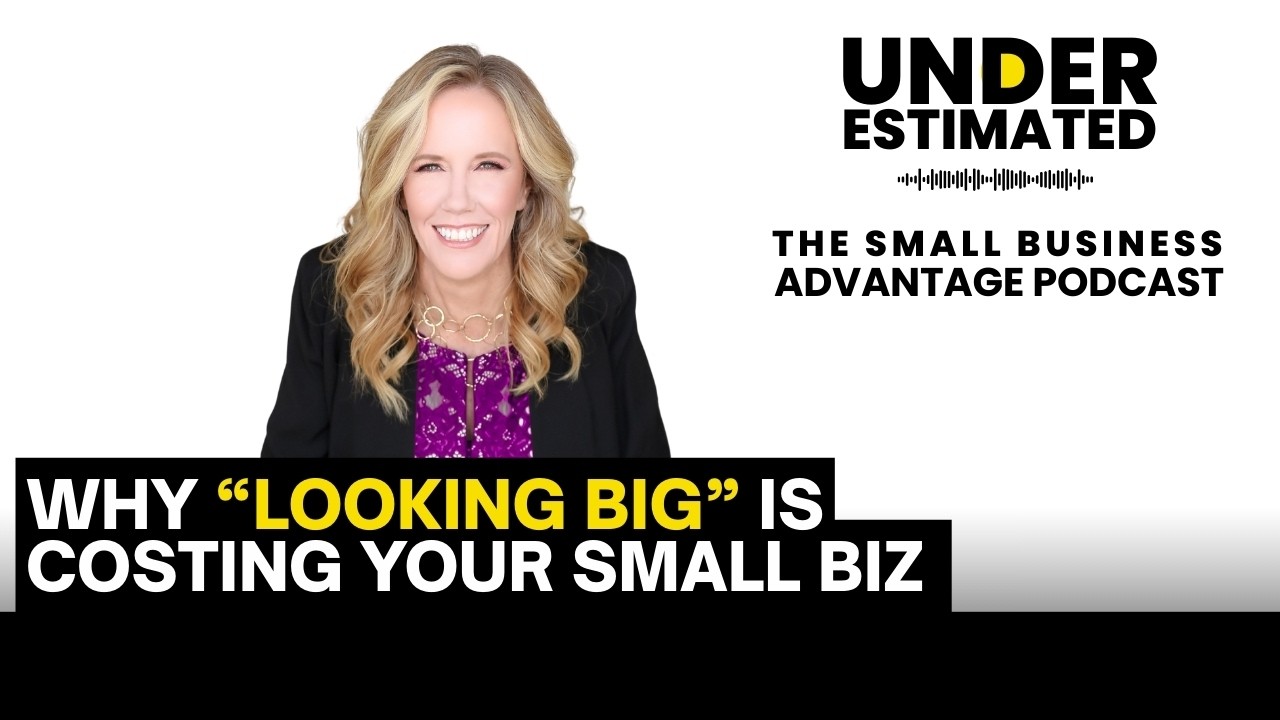
Why Acting Big Is Hurting Your Small Business
with Shawna Suckow ” Consumer Behavior Expert & Small Business Marketing Strategist
Released Sunday, March 1, 2026
Watch It
Watch on YouTube
 –
– Watch on YouTube ” opens in new tab
–
– Watch on YouTube ” opens in new tab
Small businesses have been told for decades that they need to "act big" to compete. Bigger systems. Bigger messaging. Bigger presence. But that advice is quietly draining energy, resources, and the very advantage small businesses have today. In this first episode of Underestimated, Shawna Suckow breaks down why pretending to be bigger than you are is slowing growth ” and why owning your size is now a competitive edge. You'll learn how agility, proximity, clarity, and authenticity outperform polish, complexity, and corporate positioning in today's buyer landscape.
In This Episode
Key Topics Discussed
“ The Big Business Trap
- Why "act big" advice is outdated and harmful
- How trying to look bigger creates complexity before clarity
- The stress and waste of competing on budgets you don't have
- Why broad messaging dilutes your impact
Small = Agility
- You can adjust, respond, and change direction faster
- Big brands pay millions for the proximity you already have
- Focus groups vs. just talking to your customers
- Speed to market without layers of approval
Precision Over Breadth
- You get to choose your exact right customers
- Niching down is leverage, not limitation
- Being precise beats trying to serve everyone
- Why "everyone is my customer" is the biggest mistake
… Authenticity Wins
- Today's buyers respect real more than rehearsed
- Done is better than perfect in today's market
- Small businesses win on authenticity and relevance
- Polish is a big brand weapon ” don't bring it to your fight
The Bottom Line
Key Takeaways
- Small today equals agility, proximity, and freedom. Big companies would pay millions for the direct customer access you already have ” they call it focus groups. You call it Tuesday.
- Acting big too soon creates complexity before clarity. Systems too large for your stage, messaging too broad for your audience ” all of it slows you down and drains resources you don't have to waste.
- Generic messaging feels efficient. It's not. When you try to appeal to everyone, you connect with no one. Precision and specificity are your real competitive weapons.
- Buyers today respect real more than rehearsed. Over-polished, over-scripted content signals performance ” and performance signals manipulation. Authenticity wins trust.
- You don't lose because you're small ” you lose when you try to act big. The moment you stop pretending and start owning what makes you powerful, the game changes in your favor.
- The advantage small businesses have today is greater than ever. Markets have changed. Buyers have changed. The playing field has never been more level ” if you're willing to play your game instead of theirs.
Read It
Welcome to Underestimated
Welcome to Underestimated. This is the podcast that helps you leverage your size as a small business as an advantage —” not a liability.
I'm Shawna Suckow. I'm known as The Buyer Insider because I spent fifteen years behind the corporate veil as a buyer. I spent millions of dollars of other people's money, and what that taught me was how vendors of all sizes market and sell to buyers —” B2B and B2C. I saw what worked. I saw what didn't.
Now I'm a speaker, author, and consultant helping small businesses leverage what they already have, because everything has changed in how buyers buy. Today, we're laying the foundation. We're talking about why acting big is quietly hurting small businesses.
The Problem With Acting Big
For decades, we've been told we have to act big to be relevant and competitive against companies twice our size —” or thousands of times our size. That advice is outdated. If we keep following it, it creates stress, overwhelm, and wasted effort that small businesses don't need to carry anymore.
Small today equals agility. Small equals proximity. Small equals freedom. Big companies would pay millions for the kind of proximity you already have. They call it focus groups. You call it talking to your customers.
You get to choose your exact right customers. You get to niche down. You get to be precise instead of broad. Small businesses don't lose because they're small. They lose when they try to act big —” especially too soon.
How Acting Big Backfires
When small businesses feel pressure to compete with unlimited budgets and massive teams, they try to be everywhere at once. Every platform. Every channel. That's exhausting. They invest in systems that are too big for their current stage. They create messaging that tries to appeal to everyone. Generic messaging feels efficient. It's not. It's diluted.
Trying to look bigger often leads to complexity before clarity.
When I first recorded this podcast, I scripted the entire episode word for word because I thought I needed to nail it. It was terrible. It didn't sound like me. It felt stiff and over-polished. I had to throw it away and start over. Done is better than perfect. Today's buyers respect real more than rehearsed.
Your Real Competitive Advantage
Big businesses win on polish. Small businesses win on authenticity, agility, and relevance. You can adjust faster. Respond faster. Change direction faster. You don't have to serve everyone. You don't have to be everything to everybody. That's leverage.
Markets have changed. Buyers have changed. And the advantage small businesses have today is greater than ever —” if you're willing to stop acting big and start owning what makes you powerful. That's what Underestimated is about.