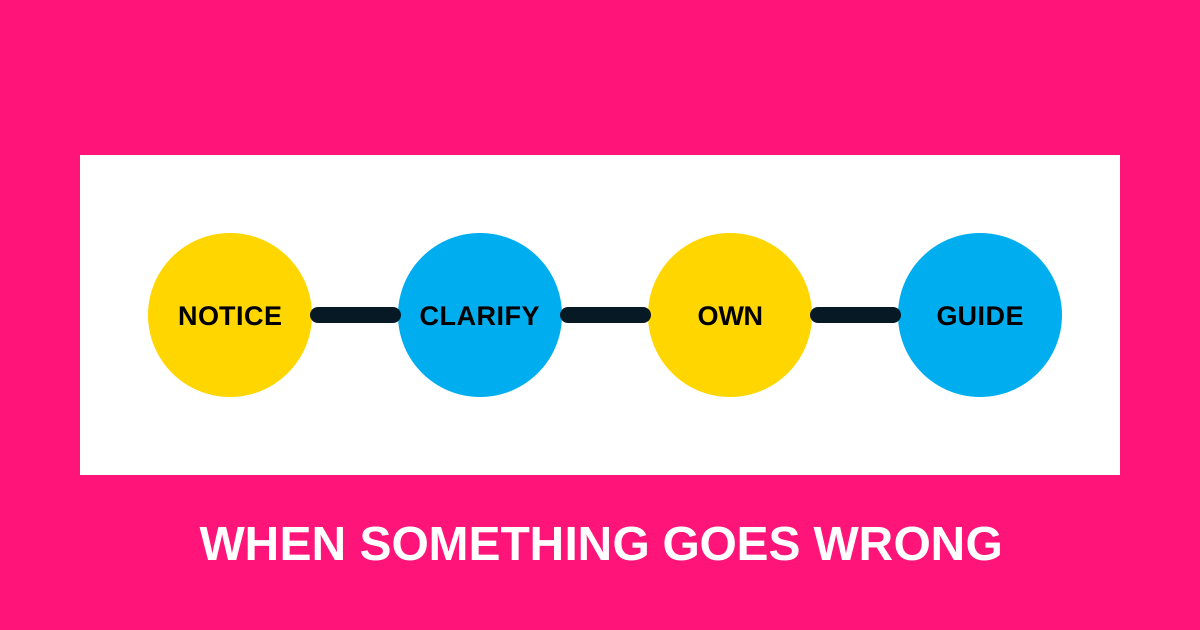
When something goes wrong, customers are not only judging the problem. They are judging what happens next.
A delay, mistake, outage, missed expectation, confusing bill, broken handoff, or incorrect answer creates uncertainty. The customer wants the problem fixed, of course. Before that happens, they need evidence that a capable human has noticed and taken responsibility.
The Four Things People Need to Hear
1. "I see what happened."
Use specific language. "I can see that you were promised an update yesterday and did not receive one" feels very different from "We understand your frustration." One names the actual experience. The other sounds like it came from a laminated card.
2. "I understand why it matters."
Acknowledge the consequence, not only the event. The missed delivery may affect a launch. The system issue may stop someone from doing their job. The wrong answer may have cost them time or confidence.
3. "Here is what I can own."
Ownership does not mean promising an outcome you cannot control. It means naming the action you can take and who is responsible for it. Say, "I am checking the remaining step now," not, "Someone in another department handles that."
4. "Here is when you will hear from me again."
Silence makes uncertainty grow. Give a specific update time, even if you may not have the final answer by then. "I will update you by 3:00, even if the work is still in progress" creates a handrail.
A Response Formula Anyone Can Use
Acknowledge + clarify + own + guide.
The human version does not need extra charm. It needs evidence.
When You Do Not Have the Answer Yet
People can handle uncertainty better than vagueness. Say what you know, what you do not know, what you are doing next, and when you will return.
Try: "I can see where the process stopped. I do not yet know why it stopped. I am contacting the team that can confirm that, and I will come back to you by 11:30."
When the Answer Is No
A firm answer can still be a human answer. Explain the constraint briefly, then guide the person toward the closest useful option.
Try: "I cannot change that deadline, and I know that is not the answer you hoped for. I can reserve the earliest available time and send you two alternatives today."
When Your Organization Made the Mistake
Do not hide responsibility inside passive language such as "an error occurred." Name the mistake plainly, correct it, and explain what will prevent a repeat.
Try: "We gave you the wrong information. I have corrected the immediate issue, and I am reviewing how the handoff happened so the same gap does not affect you again."
What Not to Say
- "Per our policy..." before acknowledging the person.
- "There is nothing I can do" when you can still clarify, guide, or escalate.
- "Someone will contact you" without an owner or time.
- "Calm down" in any language, including the polite corporate version.
- A joke before the customer has evidence that the problem is being handled.
The Real Recovery Test
A great recovery does not require a dramatic gesture. It requires a sequence the customer can trust: you noticed, you understood, you took ownership, you communicated, and you followed through.
The final step is the one most organizations miss. If you promise an update at 3:00, update them at 3:00. Trust is rebuilt in the small space between what you said and what you did.